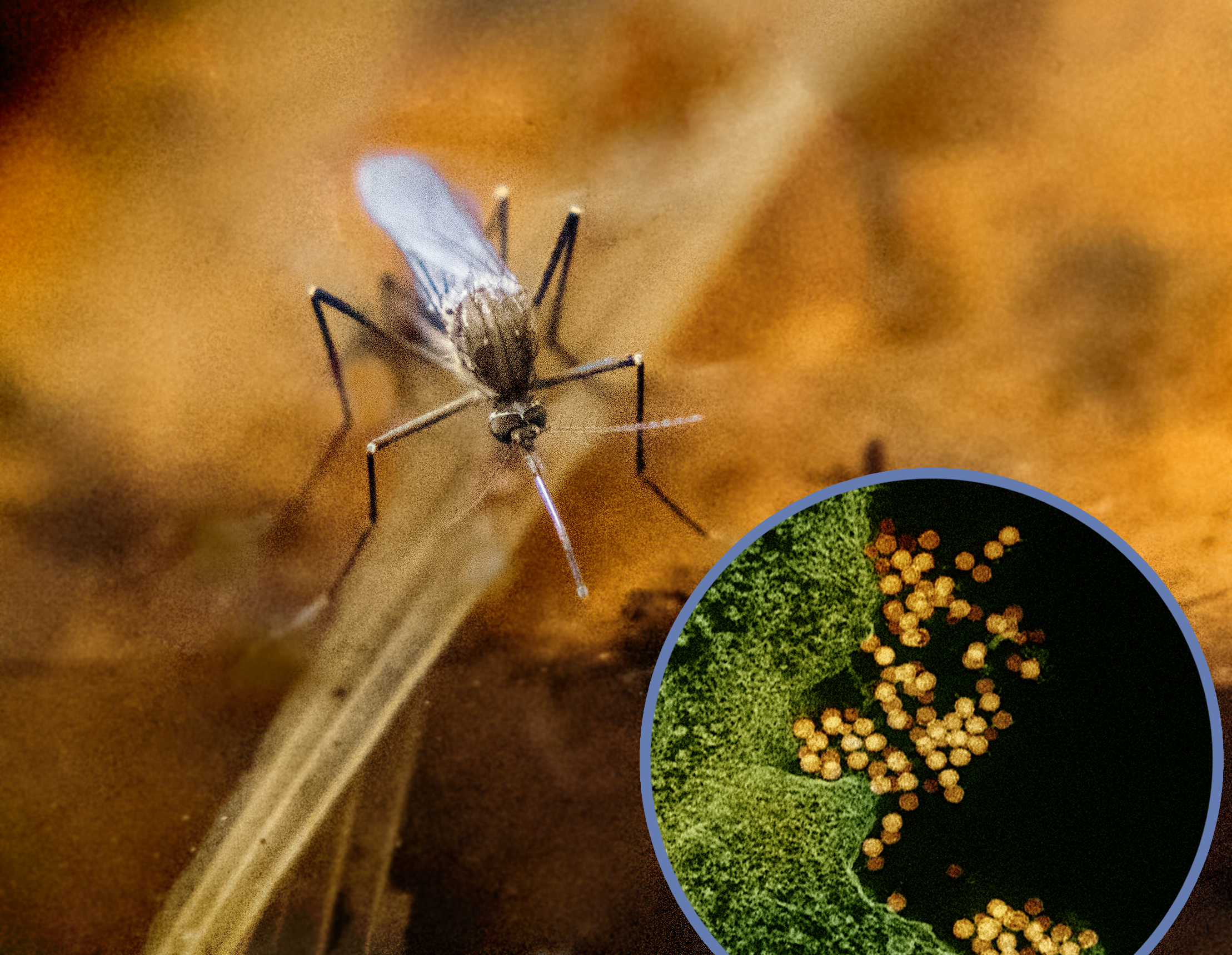
A Fulton County resident has tested positive for West Nile virus, the first confirmed human case this year in the county that includes Johns Creek.
The U.S. Centers for Disease Control and Prevention (CDC) reported the case as part of its current-year data, Atlanta News First reported Friday, Sept. 11. No specific location within Fulton County has been released. The case is one of four human West Nile infections confirmed in Georgia this year, with one in Muscogee County and two in Chatham County.
Nationally, the CDC listed 407 total human cases as of Sept. 9, according to public health data compiled by Hoodline. The CDC said favorable weather contributed to one of the earliest starts to the U.S. West Nile season since 2004.
The virus has no vaccine. It is not contagious.
Positive mosquito traps have been turning up across Fulton County since summer. The Fulton County Board of Healthreported the county's first positive trap on Wednesday, July 8, in the Grant Park area of East Atlanta.
Traps at Roswell Area Park and Garrard Landing Park tested positive Sept. 1, prompting a county contractor, Vector Disease Control International, to treat areas within a quarter-mile radius. A trap at Chastain Memorial Park, a 268-acre park in Buckhead, also tested positive, triggering treatment within a quarter-mile radius of the trap beginning Sept. 10. In neighboring DeKalb County, 10 mosquito traps have tested positive this year, though no human cases have been reported there.
Dr. Brandon Leftwich, environmental health director at the Fulton County Board of Health, warned in a Wednesday, July 8, statement announcing the county's first positive trap: "We want to make sure communities are aware and take necessary precautions to protect themselves."
Dr. Robin Dretler, an infectious disease specialist at Emory Healthcare, told WABE on Sept. 10 that pink eye, stiff neck, confusion and leg weakness are signs of severe complications requiring immediate medical attention. People older than 50, organ transplant recipients and those with cancer or diabetes face the greatest risk of severe illness.
About 80% of infected people show no symptoms, according to CDC data. Roughly 20% develop mild flu-like illness including fever, headache and body aches. Fewer than 1% progress to severe neuroinvasive disease.
The Fulton County Board of Health recommends its "five Ds" of prevention: avoid outdoor activity at dusk and dawn, dress in loose-fitting long sleeves, use insect repellent containing DEET, drain standing water from containers and gutters, and check that doors and window screens fit tightly.
Residents with questions can call the Fulton County Board of Health at 770-520-7500 or visit FultonCountyBOH.com.