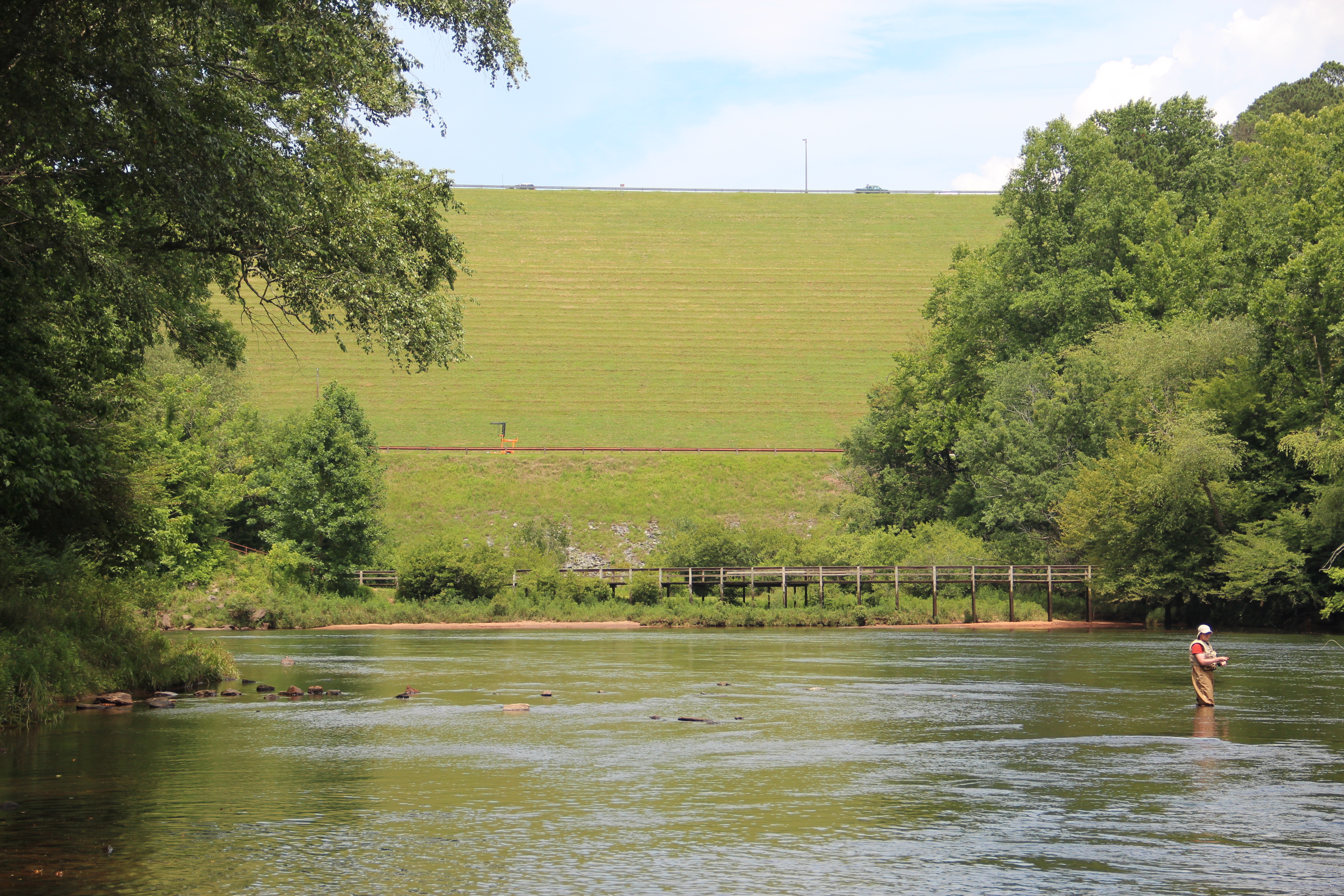
Drought operations are conserving water in the reservoir system that feeds the Chattahoochee River through Johns Creek as Lake Lanier remains more than eight feet below its full-pool benchmark.
The stakes extend across the region. Chattahoochee Riverkeeper estimates that Lake Lanier and the Chattahoochee together supply about 70% of metro Atlanta’s drinking water.
North Atlanta Star’s Nov. 4 report placed Lanier at 1,062.57 feet that morning—8.43 feet below the 1,071-foot benchmark—and reported that the latest drought operations began Nov. 2.
What the operations change
The Corps manages Lanier alongside West Point and Walter F. George reservoirs, with drought decisions based on combined storage rather than a single lake elevation.
WABE reported Nov. 9 that the Corps had already limited Lanier releases for months. Additional reductions in releases into Florida’s Apalachicola River are intended to preserve upstream storage. Regional water planning director Danny Johnson told the station that metro Atlanta was not facing an immediate shortage.
November was not the first activation this year. A May 5 Corps announcement said federal drought operations in the Apalachicola-Chattahoochee-Flint basin began May 1.
Rainfall has fallen short
A Lake Lanier Association analysis documents the accumulated deficit. Vice President and Secretary Clyde Morris calculated that Gainesville received approximately 92.2 inches of rain from August 2024 through August 2026, compared with a historical normal of about 111.4 inches.
That amounts to a 19.3-inch shortfall, or roughly 17%.
Occasional wet months provided relief without eliminating the deficit. September 2024 recorded 10.22 inches, largely because of Hurricane Helene.
What residents can do
Georgia EPD’s current guidance continues to list a statewide Level 1 drought response. It requires public water systems to communicate drought conditions and encourage conservation, without adding residential watering restrictions.
Existing rules remain in effect. Landscape irrigation is generally allowed between 4 p.m. and 10 a.m., with exceptions for uses including hand watering and drip irrigation.
Residents can reduce demand by repairing leaks, running full dishwasher and laundry loads, and avoiding unnecessary outdoor watering.
NOAA’s winter outlook favors wetter-than-average conditions across the Southeast during December through February. That offers prospects for relief, but does not guarantee when rainfall will replenish the reservoirs.